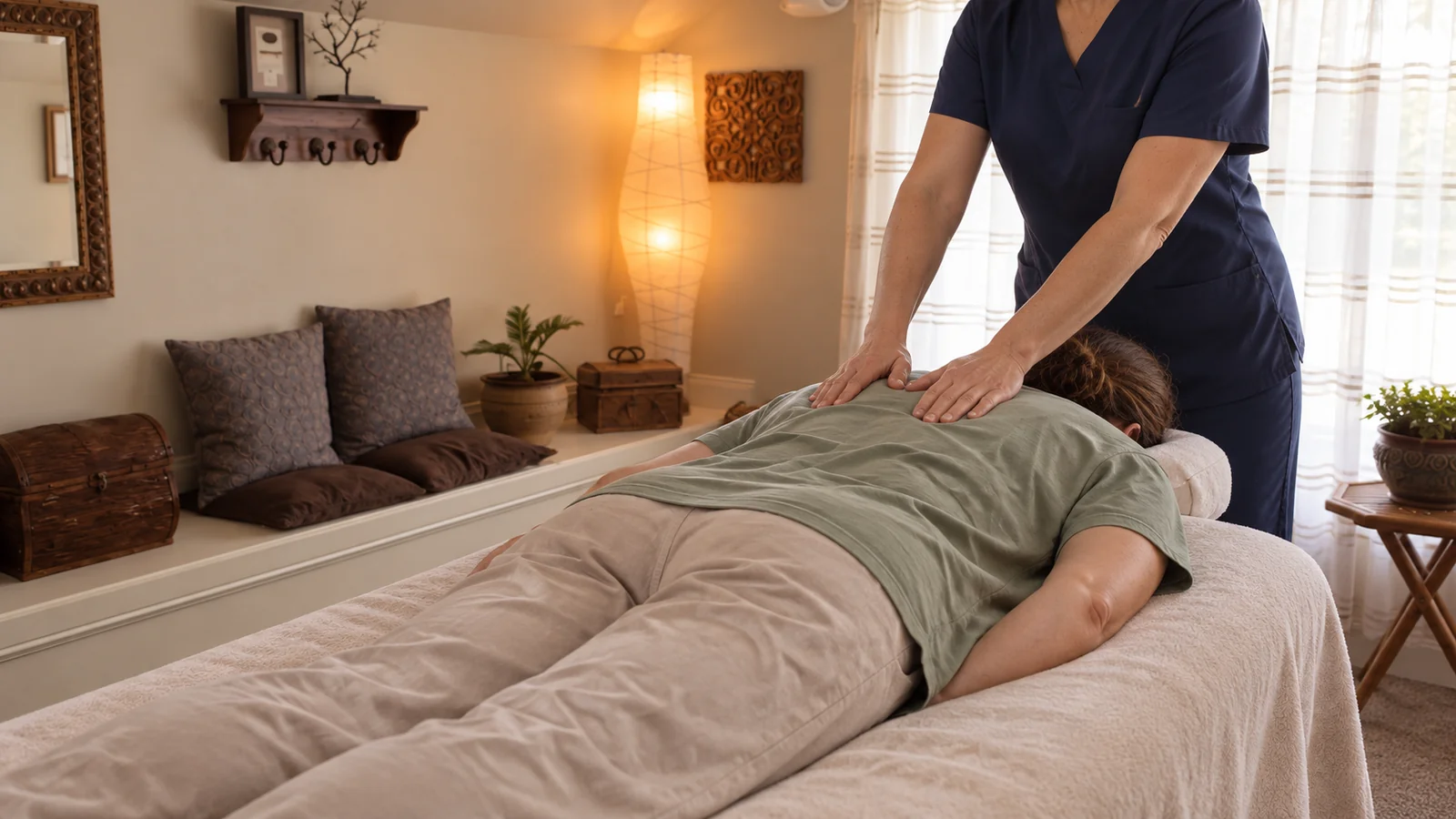
Deep Tissue Massage in Buda, TX
Slow, sustained pressure that reaches the muscle layers a standard massage skips.
What deep tissue massage actually involves
Deep tissue massage works below the surface layer of muscle, into the fascia and the fibers underneath. The pace is slower than a relaxation massage and the pressure is sustained rather than gliding, which is what lets tissue actually release instead of bracing against the contact. Jill works the specific areas you name, checks pressure as she goes, and adjusts rather than running a fixed routine on a timer.
Most people book deep tissue for one of three reasons: a specific area that has hurt for weeks or months, a job that loads the same muscles every day, or training that has outpaced their recovery. All three respond to the same principle — find the tissue that is holding, stay with it long enough for the nervous system to let go, then restore movement through the surrounding area so the change lasts past the parking lot.
Pressure is a conversation, not a setting. Deep does not mean painful. Work that pushes past what your body can tolerate causes it to guard, which is the opposite of what you came in for. Productive deep tissue sits at the edge of comfortable — noticeable, breathable, and something you can stay relaxed through. Jill will ask, and you should answer honestly; the session gets better when you do.
A 60-minute session is enough to work two or three related areas thoroughly. If you are carrying tension through the whole back, shoulders, and neck, or you want detailed work plus time to integrate it, 90 minutes gives the session room to finish properly rather than ending mid-region.
Book this if
- You sit at a keyboard and your upper back and neck have paid for it
- One area — a shoulder, a hip, the low back — has been tight for months
- You lift, run, or ride, and recovery is not keeping up with volume
- Lighter massage feels pleasant but never quite reaches the problem
- You have had deep tissue before and want a therapist who checks in
How the session runs
Intake
Five minutes on what hurts, when it started, what makes it worse, and any injuries or conditions Jill should work around.
Warming the tissue
Broader, lighter strokes first. Going straight to depth on cold tissue is how people end up sore for three days.
Targeted work
Sustained pressure into the areas you named, with pressure checks as she goes. This is the bulk of the session.
Integration
Broader work through the surrounding region so the released area is supported by everything around it.
Aftercare
Specific notes on hydration, movement, and what mild next-day soreness is normal versus worth mentioning.
When to book something else
Deep tissue is not the right choice during an acute flare-up, immediately after a new injury, or if you are on blood thinners without clearing it with your physician first. Mention any of these when you book and Jill will adapt the session or recommend a gentler modality.
Deep Tissue Massage questions, answered
Does deep tissue massage hurt?
It should feel intense but not painful. Effective deep tissue sits at the edge of comfortable — you can breathe through it and stay relaxed. If you are clenching or holding your breath, the pressure is too much and the muscle will guard against it. Jill checks pressure throughout the session and adjusts on the spot.
How sore will I be the next day?
Mild soreness for 24 to 48 hours is normal, similar to the day after a good workout. Sharp pain, bruising, or soreness lasting beyond three days is not, and it usually means the pressure was too aggressive. Drinking water and moving gently the next day makes a noticeable difference.
How often should I get a deep tissue massage?
For an active problem area, every one to two weeks until it settles, then monthly to hold the gains. For general maintenance and desk-related tension, once a month is the interval most clients land on. Jill will give you an honest recommendation after the first session rather than selling a package.
Should I book 60 or 90 minutes?
Sixty minutes covers two or three related areas thoroughly — for example neck, shoulders, and upper back. Choose 90 minutes if you want full-body work, if you have more than one problem area, or if you have had a session cut short before the therapist got to everything.
What is the difference between deep tissue and sports massage?
They overlap heavily. Sports massage is usually structured around a training or event calendar and includes more stretching and movement work. Deep tissue is defined by the depth and pace of the pressure. Jill draws on both, so tell her what you train and where you are in your season.
Other sessions at Pure Serenity
Relaxation / Swedish Massage
Long, flowing strokes at an unhurried pace, designed to settle an overloaded nervous system.
From $120 · 60, 90, or 120 min
Pre & Post Natal Massage
Trained side-lying positioning and pregnancy-safe technique for every trimester.
From $120 · 60 or 90 min
doTERRA AromaTouch Massage
A certified eight-oil protocol applied along the spine and feet, as an add-on or on its own.
$30 add-on · 30 min add-on, or standalone